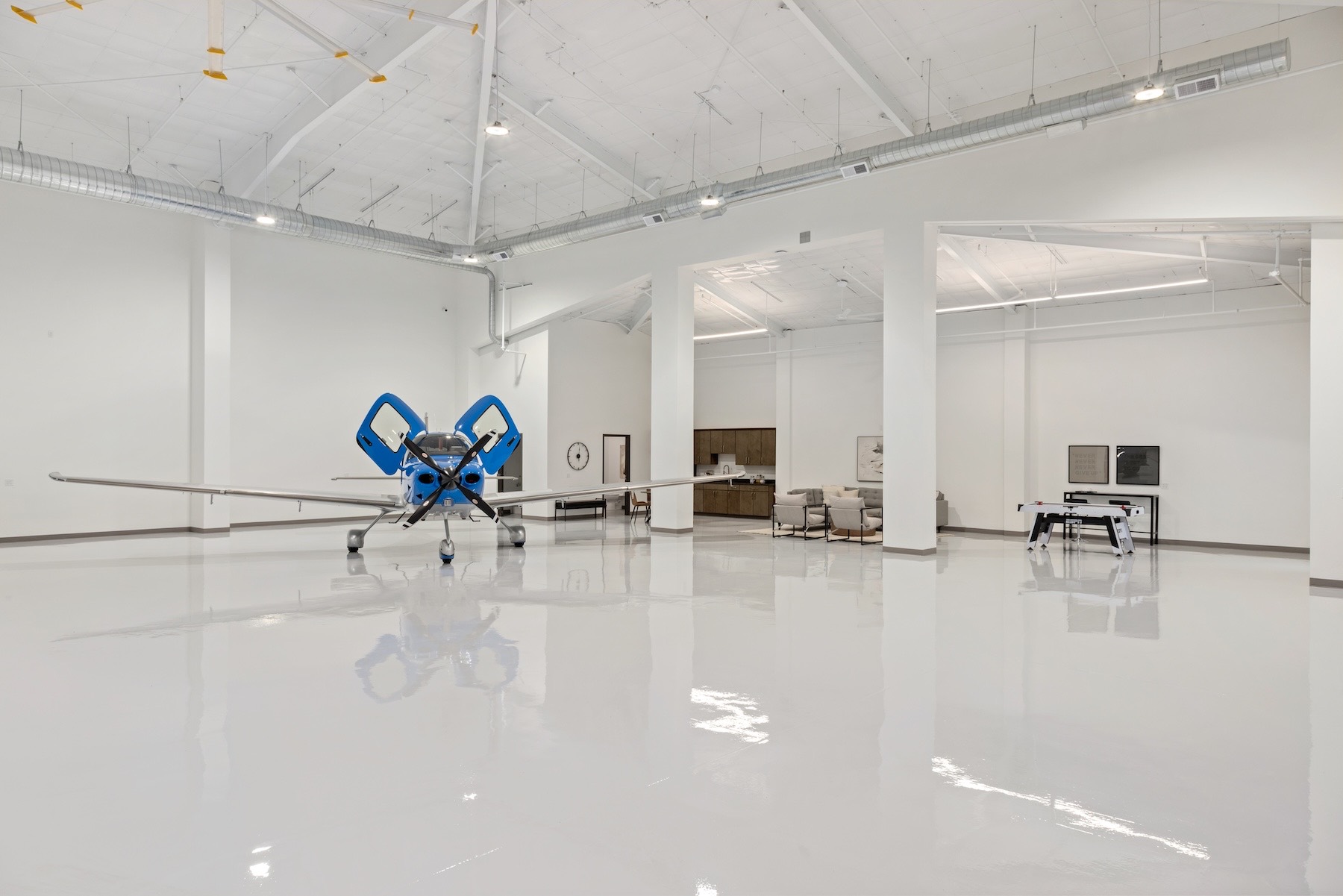
A 7,000-square-foot hangar is a hard thing to put in front of the right person.
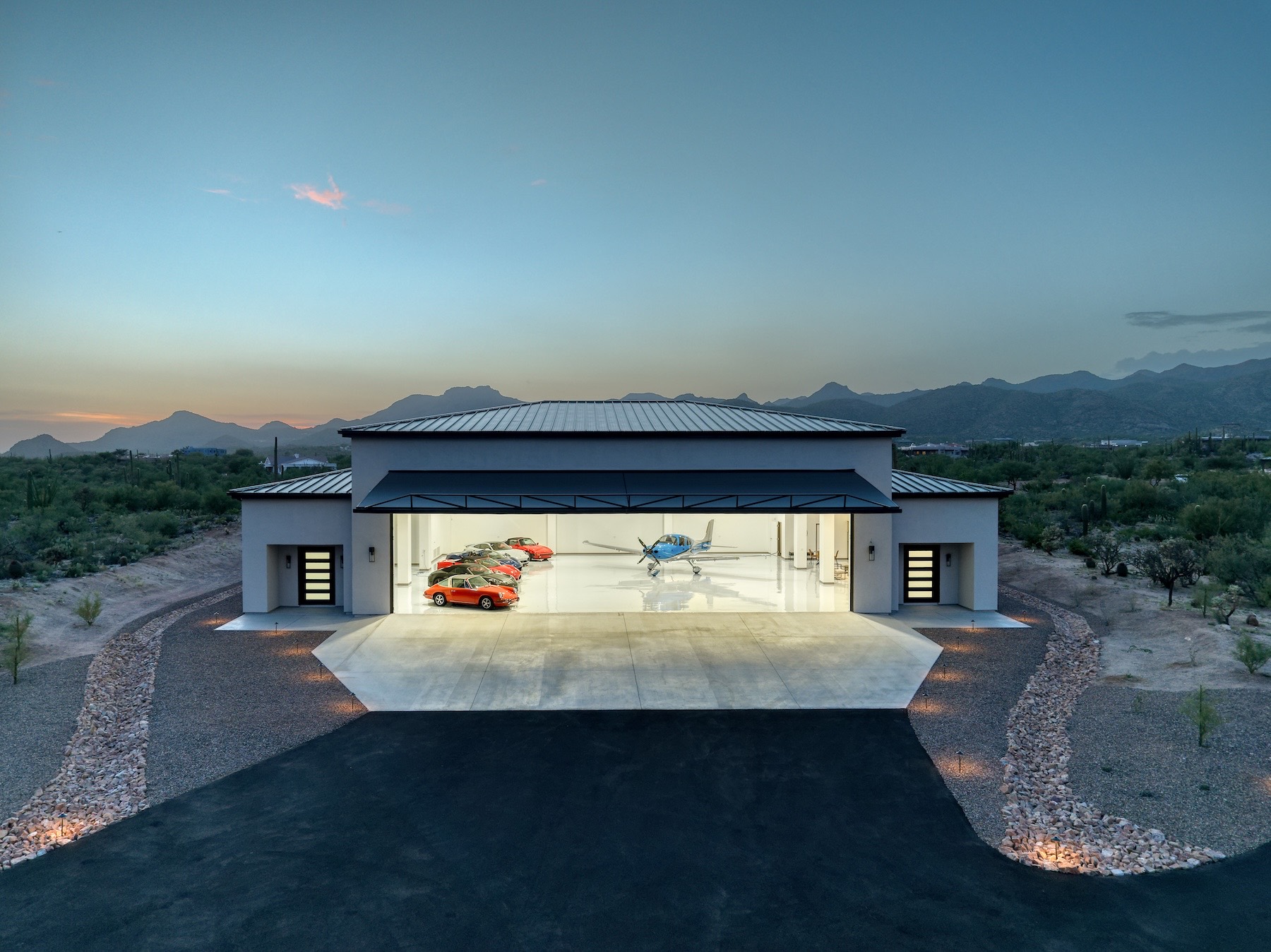
This one sits on a residential lot in La Cholla Airpark, next to the home it belongs to, in a neighborhood where people keep airplanes the way most of us keep cars. It has the ceiling height and clear span of a commercial building and the finish of a house. Most people who come across it won’t need one. The few who do know exactly what they’re looking at, and they’ll notice if we don’t.
So we made a short film. It was scripted, voiced by Clay St. Thomas, and cast with local models and actors. We built everything around one goal: a pilot should watch it and recognize their own life.
We started before the hangar was finished.
Our first walk-through was four or five weeks before the building was done. There was nothing to shoot yet, and that was the point. It gave us a month to do the work that decides how a shoot day goes: writing the script, casting, planning the flights, and working out which shots needed which camera.
Much of that month was spent with the selling agent. They knew who was likely to buy this hangar, and between us we kept returning to the same questions. Who is going to own this? What does their week look like? What would make them stop scrolling and watch? By the time the hangar was ready, the plan was done. We showed up and shot.
Getting the words right.
Pilots are a precise audience. People who fly have their own rhythms and their own vocabulary, and they hear a wrong note immediately. If the voiceover says something no pilot would say, or an actor handles the airplane like someone who has never flown, the film loses the one audience it was made for. Nothing after that moment matters, however good the light is.
So we checked everything: how a pilot moves through a day with their airplane, what it means to them, and the small habits and words someone who flies would expect to hear. We worked the script through with the agent until every line held up.
Then Clay gave it a voice. A good voiceover sounds like someone who belongs in the room. Clay’s read is calm and unhurried, and that ease does most of the persuading. It tells a pilot the person speaking has lived this life, and that the people who made the film took it seriously.
Putting the camera where a pilot sits.
We used four kinds of camera on this project, and each one had a job.
In the air, we flew in the owners’ Cirrus. From the cockpit, the film gets the view a buyer here is really paying for: the desert falling away and the airpark shrinking below.
One small camera changed the flight sequence more than anything else. We mounted a GoPro to the airplane’s tail tie-down ring, which gave us the belly of the Cirrus with the ground moving underneath it. It’s an angle nobody gets to see, including the pilot, and it gave the flight sequence a completely different energy.
On the ground, we shot the actors and the moves through the hangar on cinema cameras. The drone did what nothing else could: it showed how big the building is, how it sits beside the home, and the mountains around it.
Seven thousand square feet needs something to measure it.
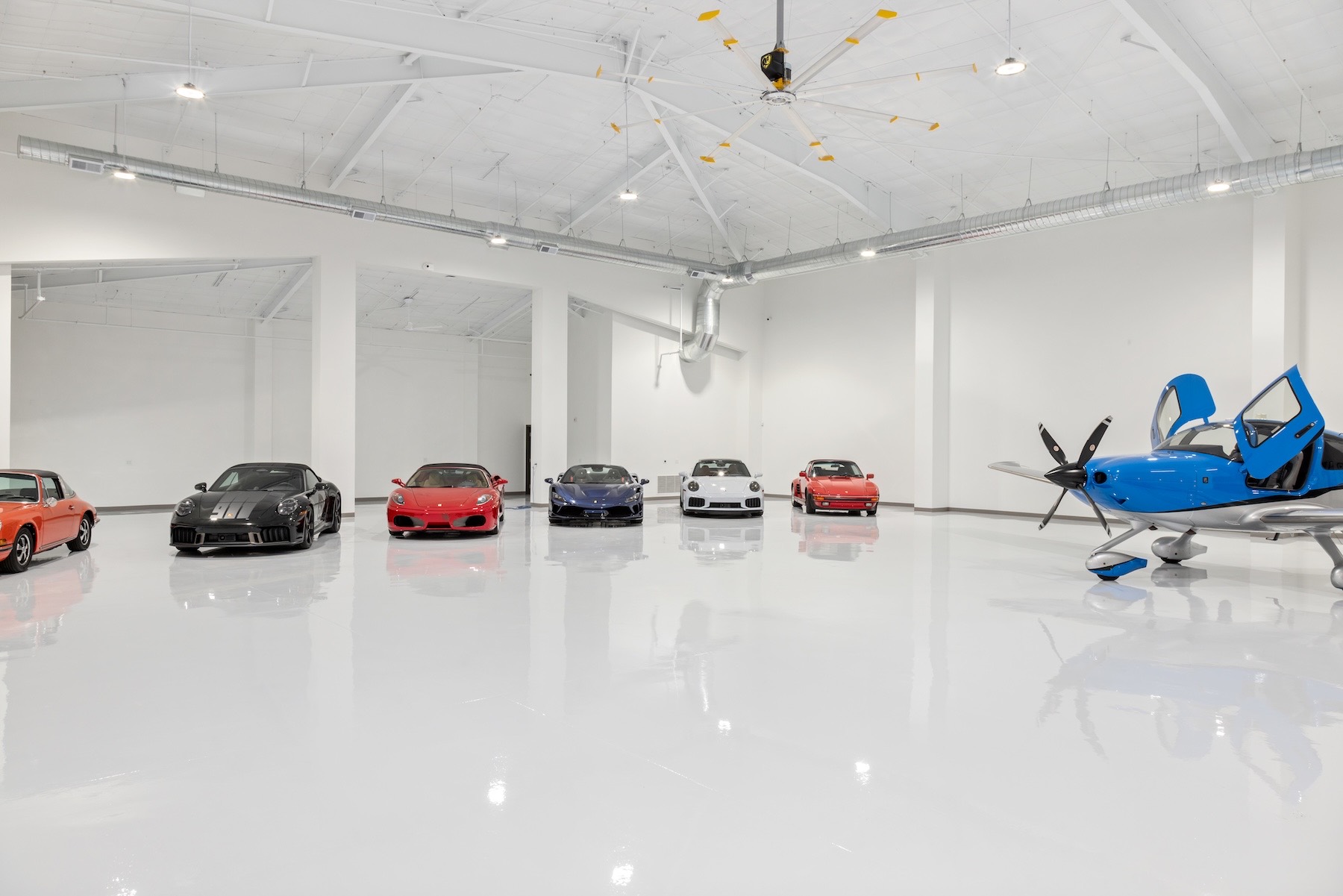
An empty hangar gives the eye nothing to judge it by. On screen, you can’t tell whether you’re looking at two thousand square feet or twenty.
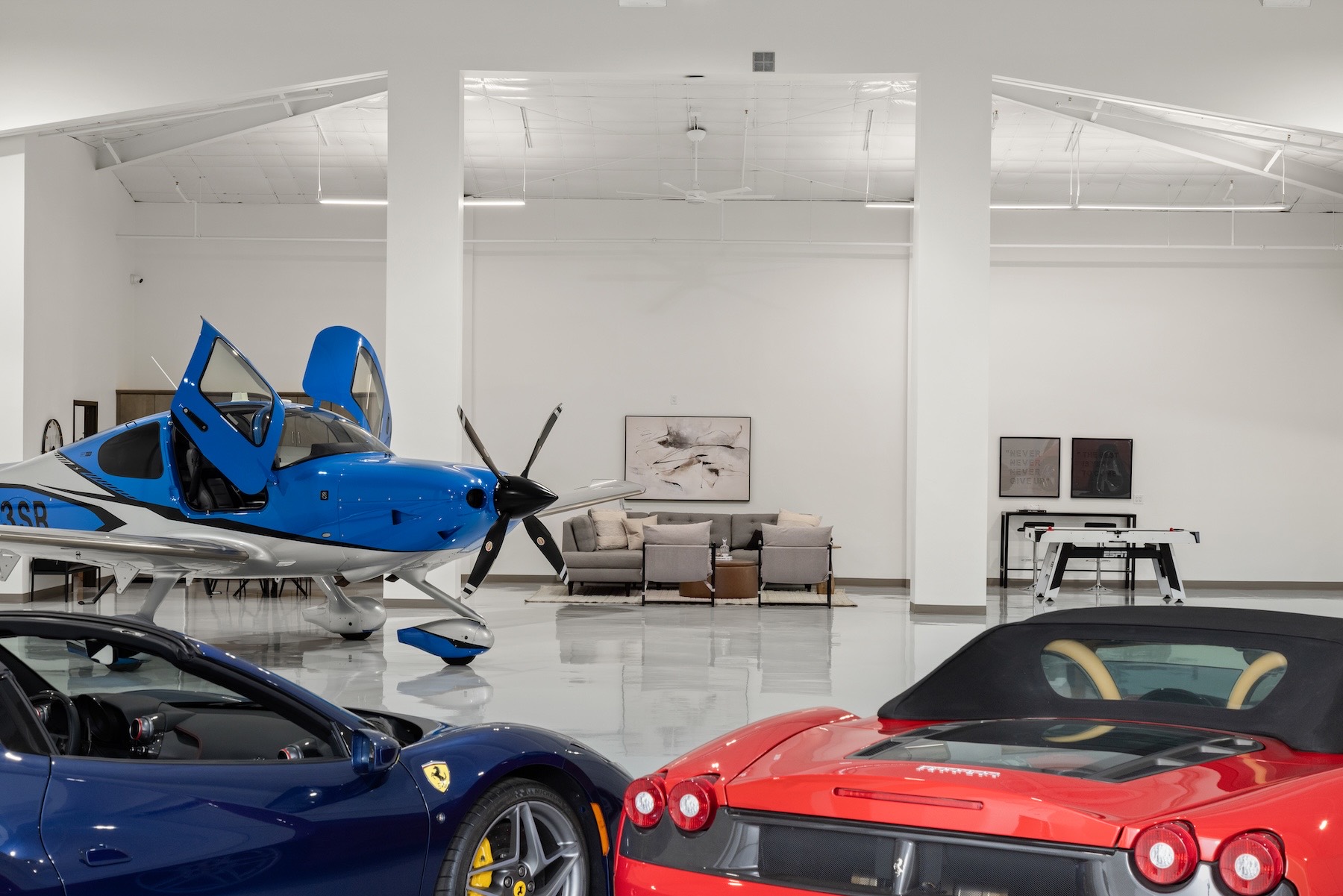
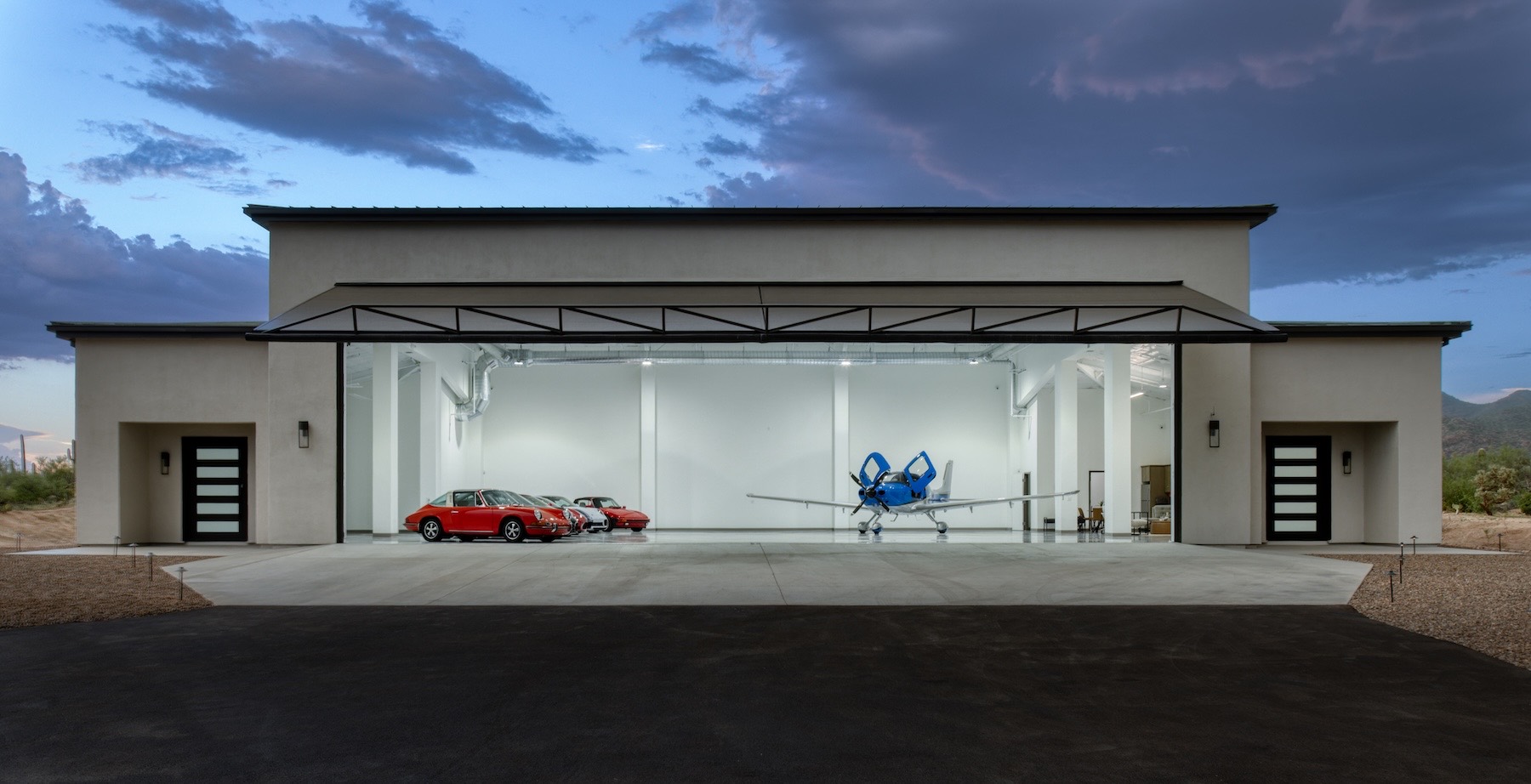
So we filled it. The owners rolled their Cirrus in, and six sports cars joined it, Porsches and Ferraris lined up across the floor. Suddenly the room has a scale anyone can read. Everyone knows how big a car is. You can count how many fit, and still see how much room is left for an airplane with its wings out.
It also answers a question a buyer is likely already asking: what else could live here? For many people shopping for a hangar like this, the airplane isn’t the only machine they care about.
The hour it glowed.
Twilight was this building’s best hour. Everything inside is white, and the epoxy floor reflects like still water. Once the hangar lights came up and the sky went blue, the whole building glowed at the end of the drive like a lantern. With the main door open, you look straight out at the Catalina Mountains.
Daytime worked well too, and we didn’t want to choose. So the film moves through a full day there, from daylight into twilight. We wanted someone to feel what a whole day in this place would be like, and to want it.
Why we pushed for staging.
Hangars are usually sold empty, and it’s easy to see why. It’s a working building, and a pilot can picture their own airplane in it without help.
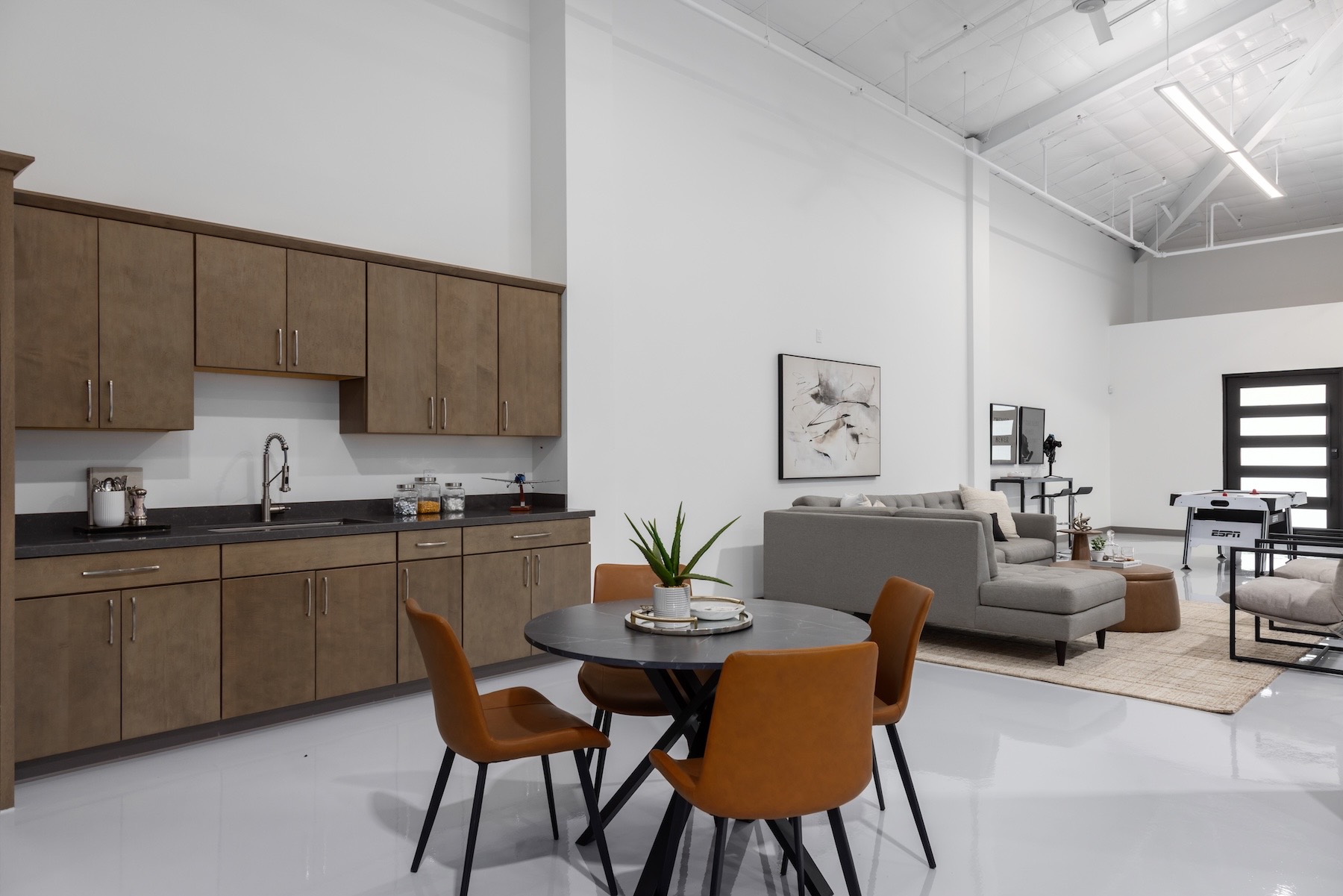
We asked for staging anyway, because a film needs somewhere for a life to happen. An empty lounge tells a buyer there’s a room. A furnished one tells them how it might feel to sit there after a flight, have friends over, or look out across the floor at the airplane. Staging is how you pitch a vision instead of a floor plan. The agent was open to it, and we’re glad they were.
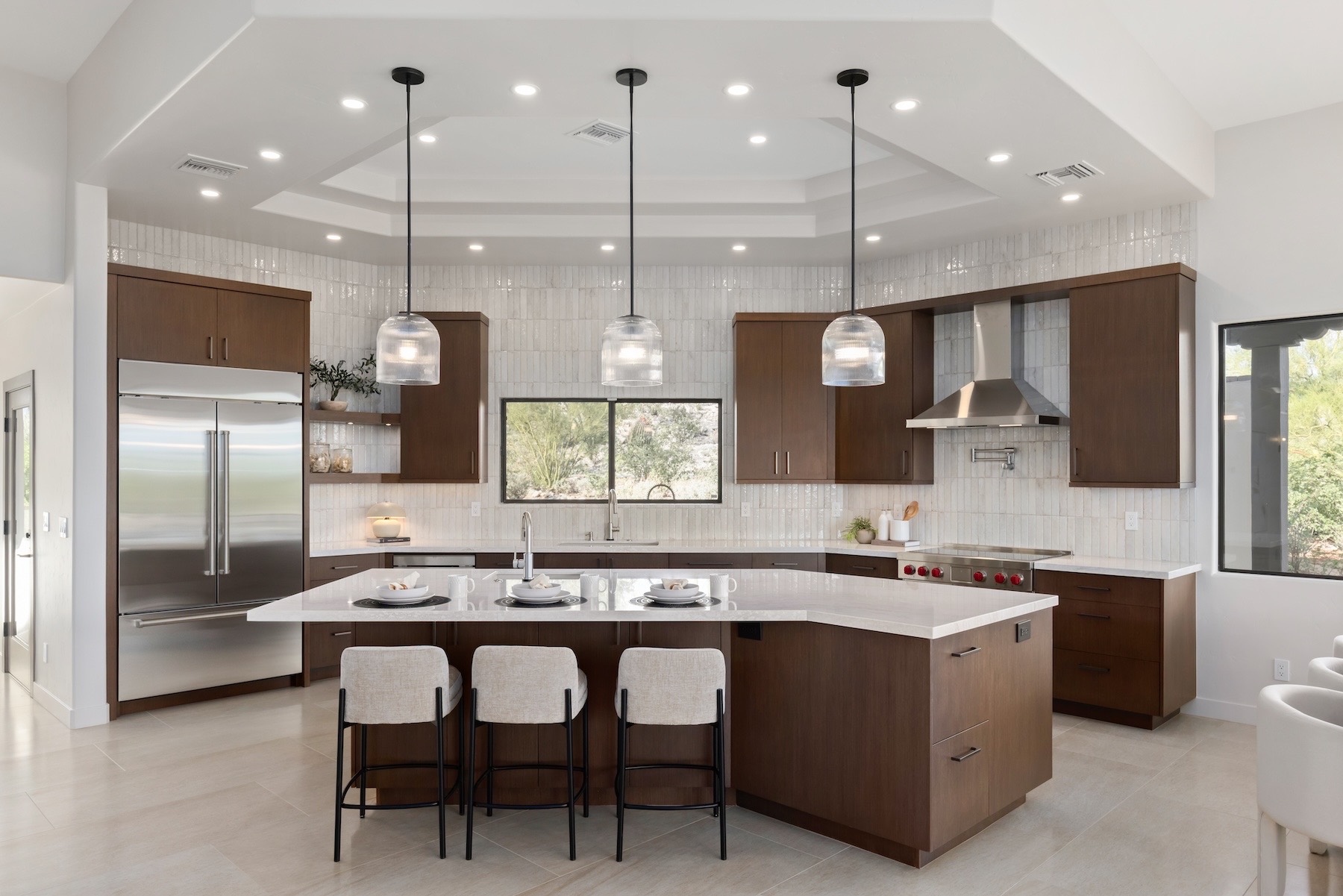
Elevated Interiors staged the lounge inside the hangar and the home next to it, and their work is a big reason the film feels lived in. In the hangar, they chose pieces that sit comfortably in a bright, industrial-scale room without pretending it’s something else. In the home, they carried the same warmth through, so the two buildings feel like one life.
Where the pilot lives.
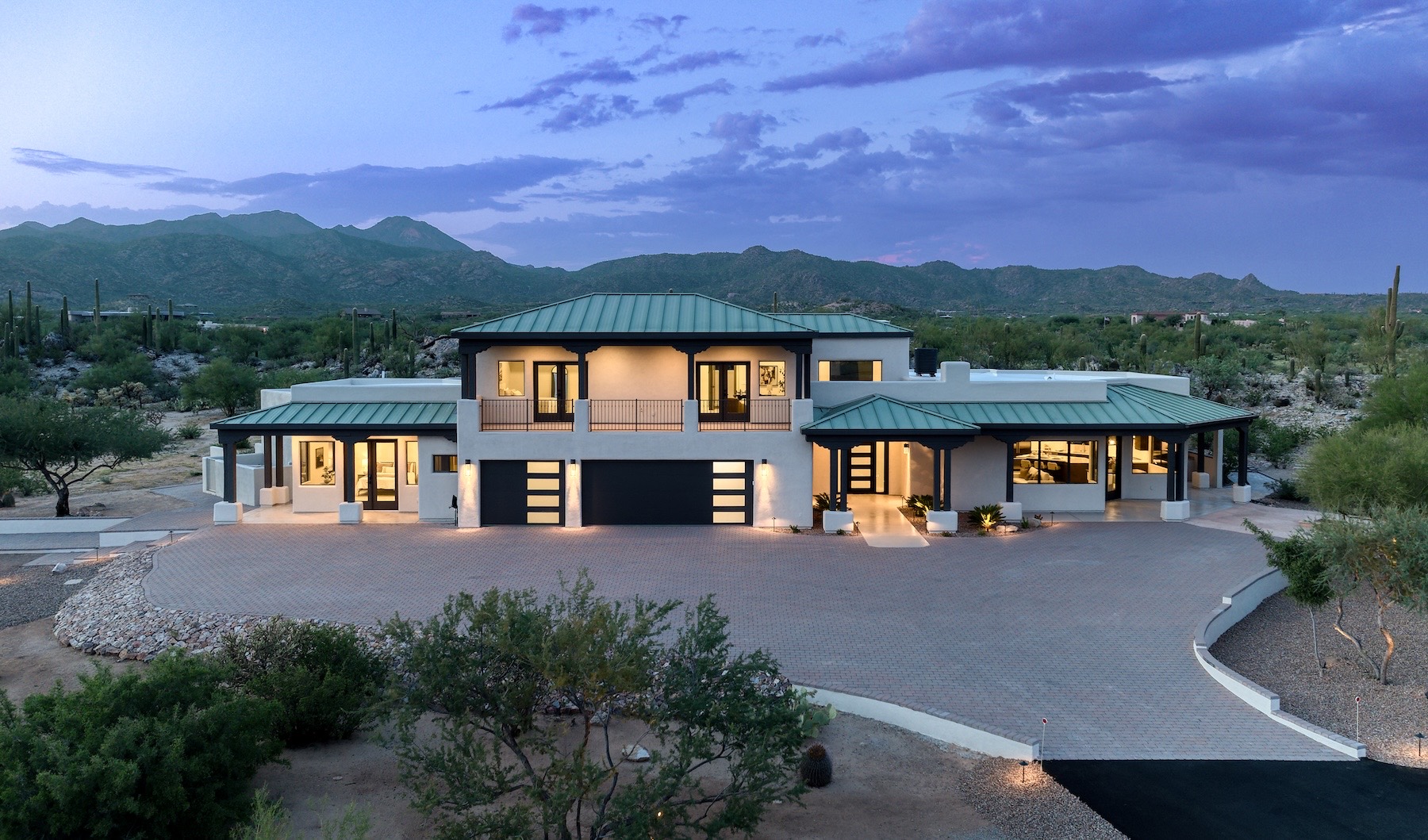
The house plays a smaller part in the story, but it matters. Someone buying a hangar like this is also choosing where they’ll live. The exteriors are twilight frames, like the hangar, so the two read as one place at the same hour.
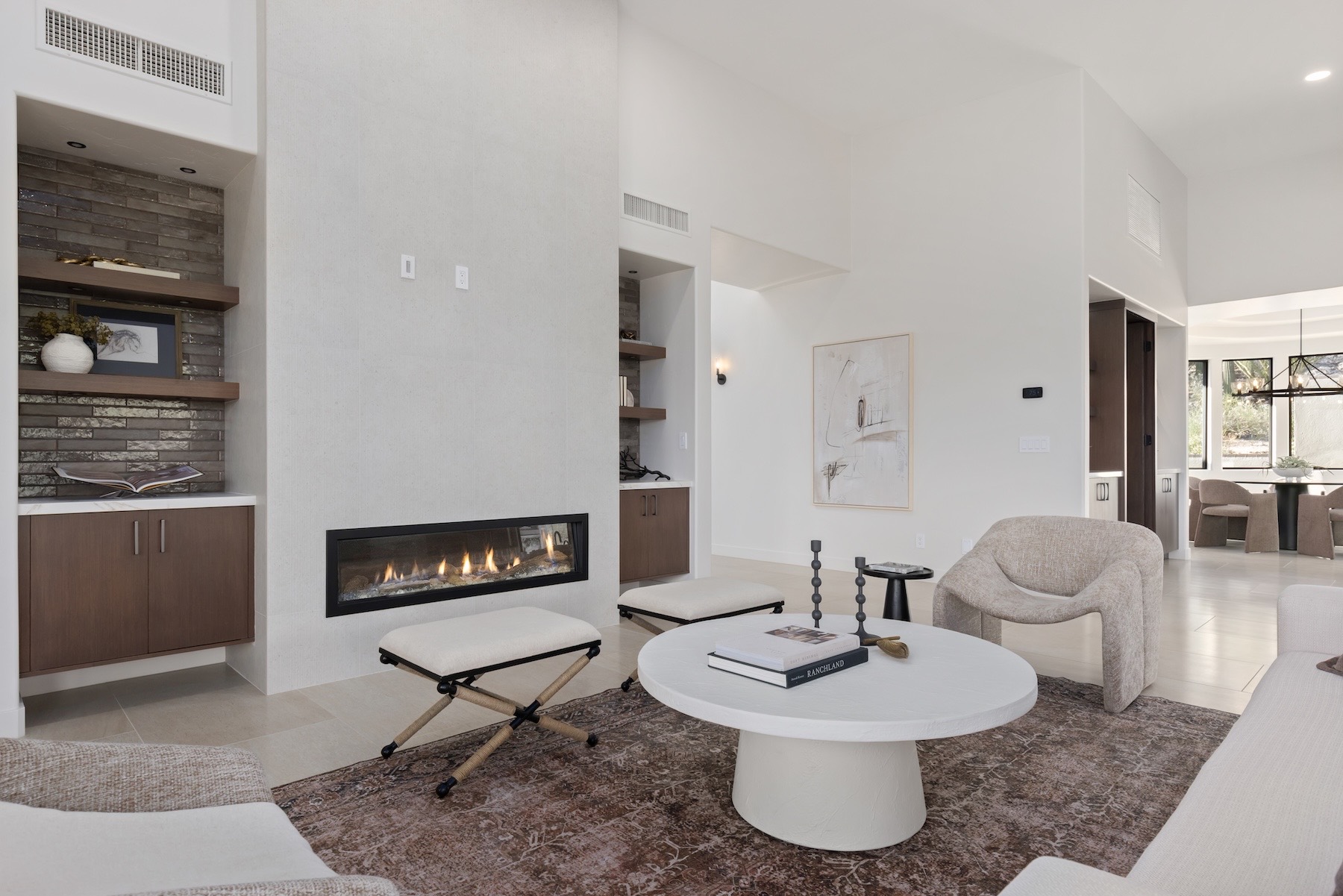
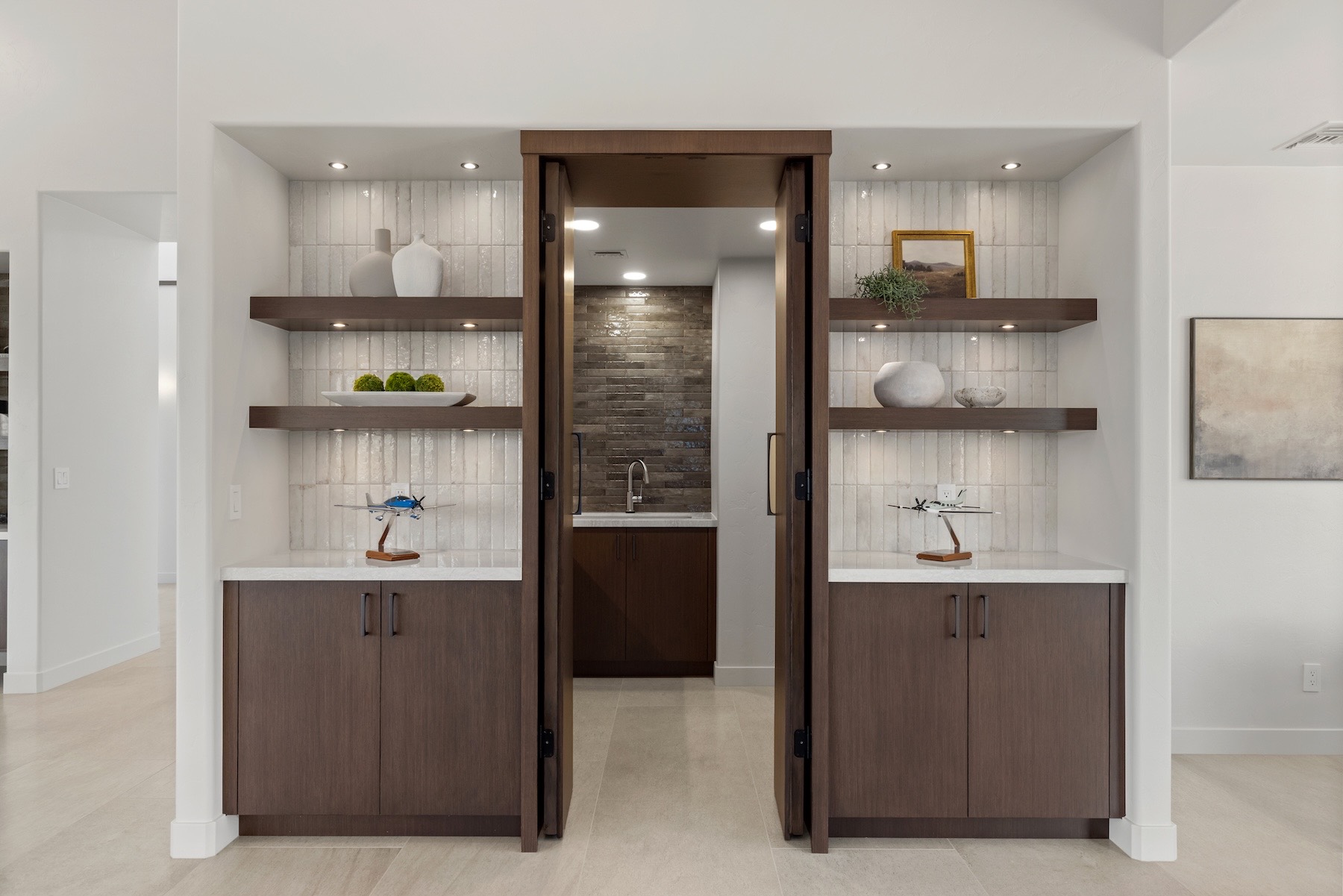
Inside, Elevated Interiors’ staging does the same quiet work. The selling agent added a touch of their own: a few model airplanes on the shelves. It’s a small detail, and it’s the kind that tells a pilot the house was set up with them in mind.
Looking back, the camera work was the easy part. What made this film work happened in the weeks before we ever rolled: understanding who would buy this hangar, and getting the words right for them.
When an audience is this specific, they’ll forgive a lot. What they won’t forgive is a detail that shows you don’t understand their life. Get those details right, and the rest of the film has room to be beautiful.